Games · Interactive systems2025 to 2026
EGS
Emotion-Responsive Game Testing System
A system that reads how players feel while they play, through their brain, body and face, and pins every feeling to the moment in the game that caused it.
- Role
- Team leader · Product designer · Unity plugin developer
- Platform
- PC, Unity, wearable EEG
- Built with
- OpenBCI (EEG), C#, Unity
- Timeline
- 10 months
The question
What if a playtest could see what the player felt, not just what they said afterwards?
01
The problem
Games are still tested by asking players how they felt after they finished. Surveys and interviews arrive late, players forget, and they tell the designer what they think the designer wants to hear. The moment that mattered is gone by the time anyone asks about it.
EGS (Emotion, Game, Stream) measures the player while they play instead.
02
From idea to product
I led a team of six engineers for ten months, and designed EGS end to end: from the first concept, through how the pieces fit together, to the product we put in front of people.
The idea is simple to say. Read the player through several channels at once, because no single signal can be trusted alone:
- Brain: EEG, through electrodes on the head.
- Body: heart rate and other body signals, read by a wearable board.
- Face: a webcam reading facial expressions.
Then fuse them into one emotional reading, and line it up with exactly what was happening in the game.
03
The Unity plugin
My own engineering piece was the bridge between the game and everything else. A Unity plugin, dropped into any game, that does two things:
- Tags the moments that matter. Every meaningful event, like mario_powered_up, enemy_stomped or mario_hit, is logged with its exact time.
- Streams the gameplay to the dashboard, so the designer sees what the player saw.
Those tags are what turn a graph of feelings into an answer: not just "the player was stressed", but "the player was stressed right after getting hit". I also worked on part of the dashboard that shows them.
04
The dashboard
While someone plays, the dashboard shows the game, the webcam and the player's dominant emotion live. Underneath, a timeline tracks five feelings (joy, stress, fear, boredom and calm) with every game event pinned to it. Afterwards, each session is saved, so a designer can scrub back to any moment and see what it did to the player.
05
The helmet
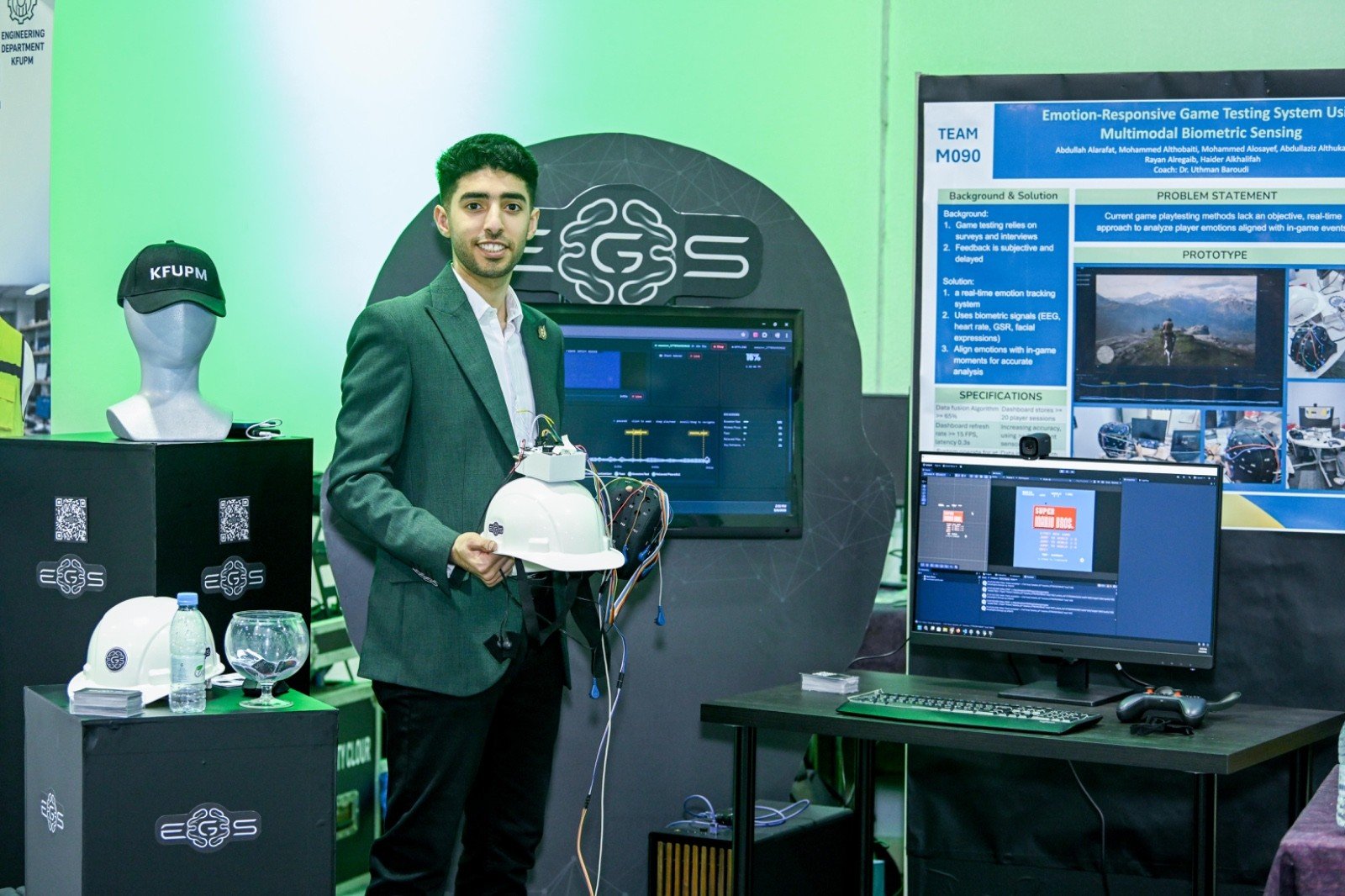
For the final product, with the help of Dream Realization Lab in DTV, we designed and prototyped a new concept where the EEG moved from a lab cap into a more casual hat: the electrodes inside, the board on top. A player puts it on in seconds and forgets it is there, which matters when the whole point is to catch honest reactions.
06
On the floor
We showed EGS at the KFUPM engineering exhibition as Team M090. Visitors put on the helmet, played Super Mario Bros, and watched their own reactions appear on the screen while they played.
07
Global Games Show
After graduation, we took EGS out of the university and into the games industry. At the Global Games Show we had our own booth, with one line on the wall: Your players feel things you can't see? Now you can.
Both headsets sat on the table, the EEG cap and our helmet, next to the live dashboard, and we spent the show talking with game developers and visitors about what playtesting could look like if it measured feeling instead of asking about it.
Technical
- Year
- 2025 to 2026
- Platform
- PC, Unity, wearable EEG
- Timeline
- 10 months
- Medium
- Games · Interactive systems
- Role
- Team leader · Product designer · Unity plugin developer
- Status
- Prototype
- Built with
- OpenBCI (EEG)
- C#
- Unity
- With
- Abdullah Alarafat — Team
- Mohammed Althobaiti — Team
- Mohammed Alosayef — Team
- Abdullaziz Althukair — Team
- Rayan Alregaib — Team
- Dr. Uthman Baroudi — Coach
- Themes
- Emotion · Perception · Human experience
Also in the archive
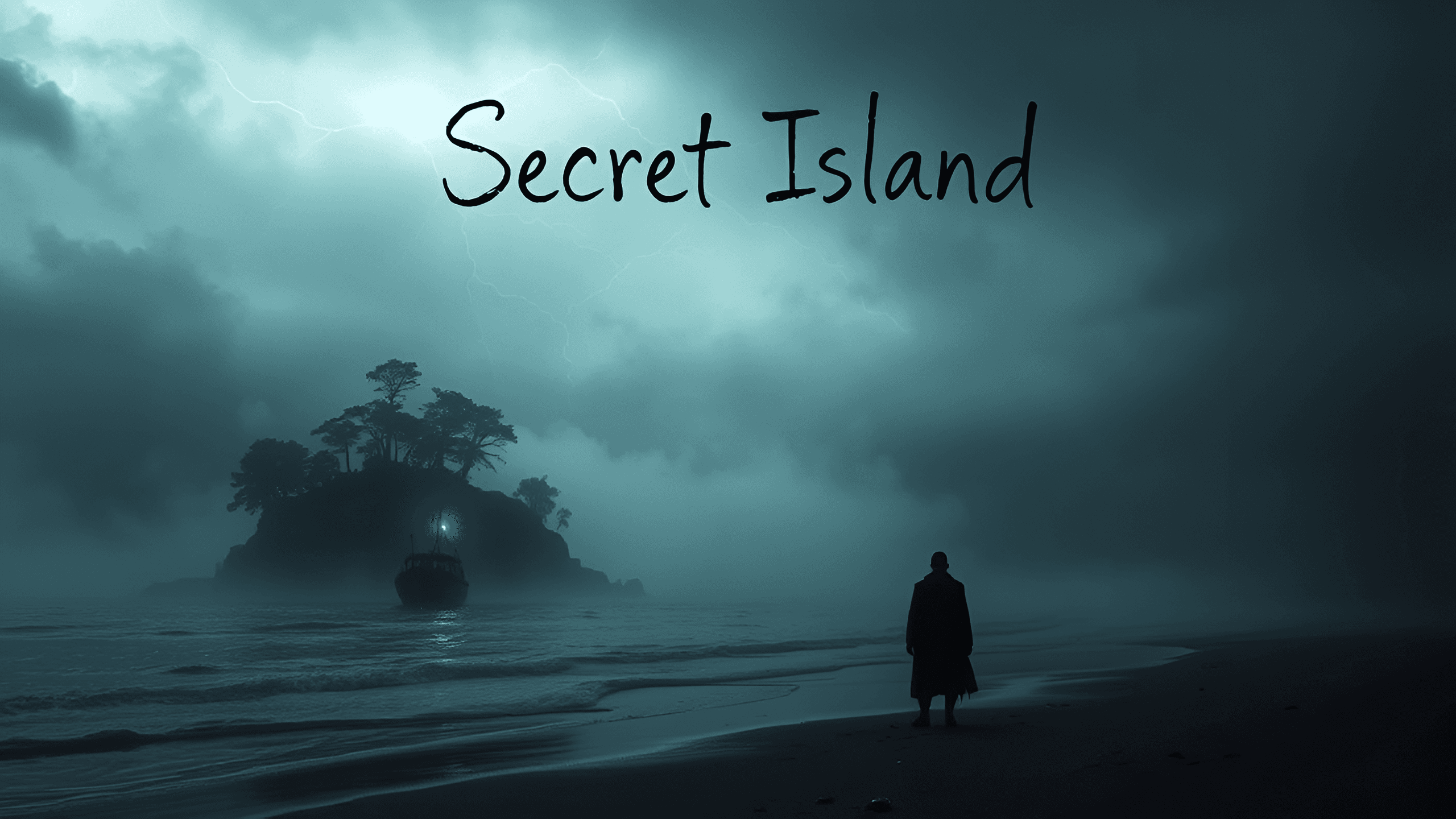
Secret Islands
In developmentGames · Experiments
An experimental horror game where the player works for a mysterious company. Their task is simple: find specific objects.
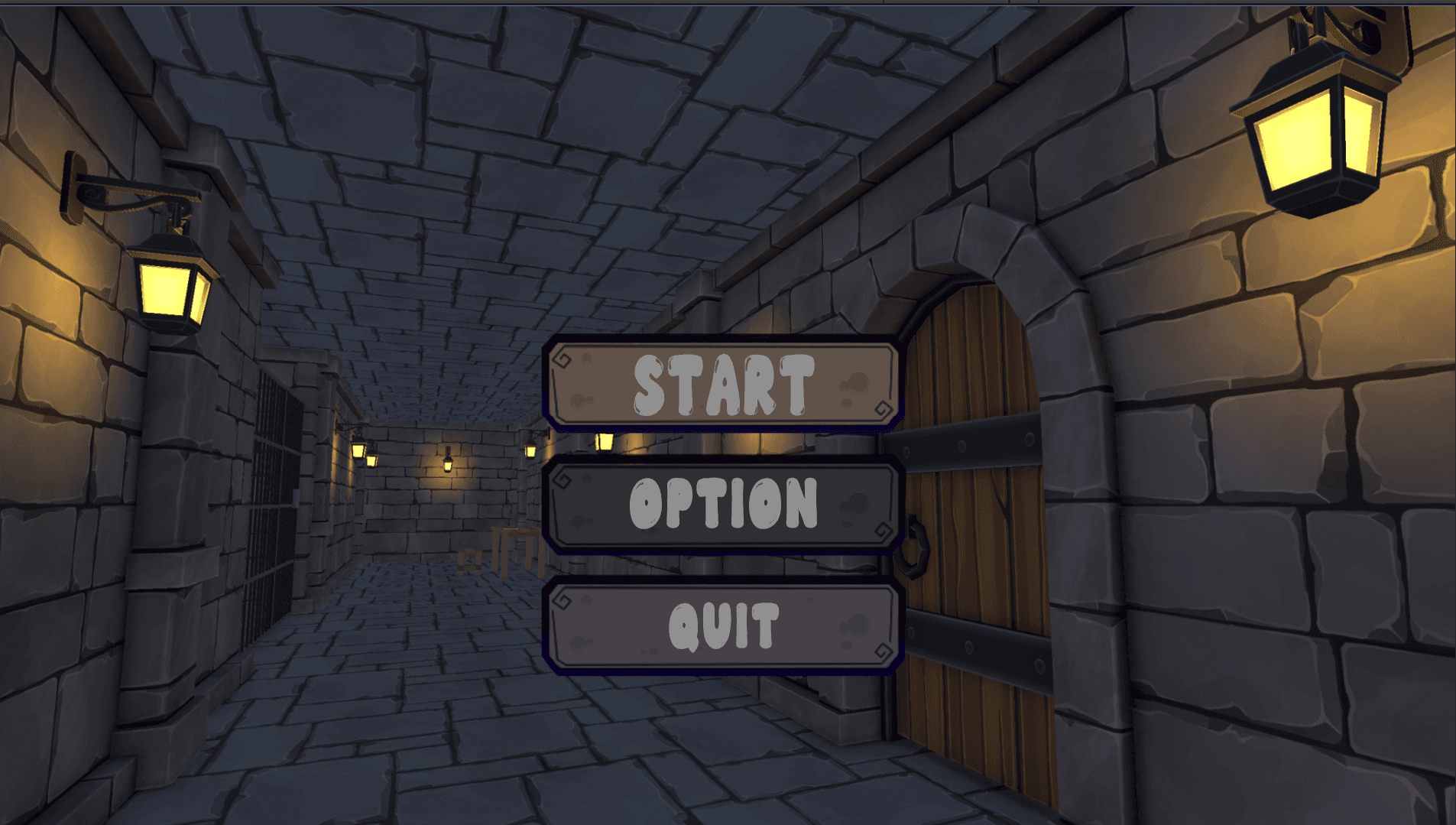
Dungeon Break
2024Games
A puzzle-adventure game where the player becomes trapped inside a dungeon and must solve a series of interconnected puzzles to escape.
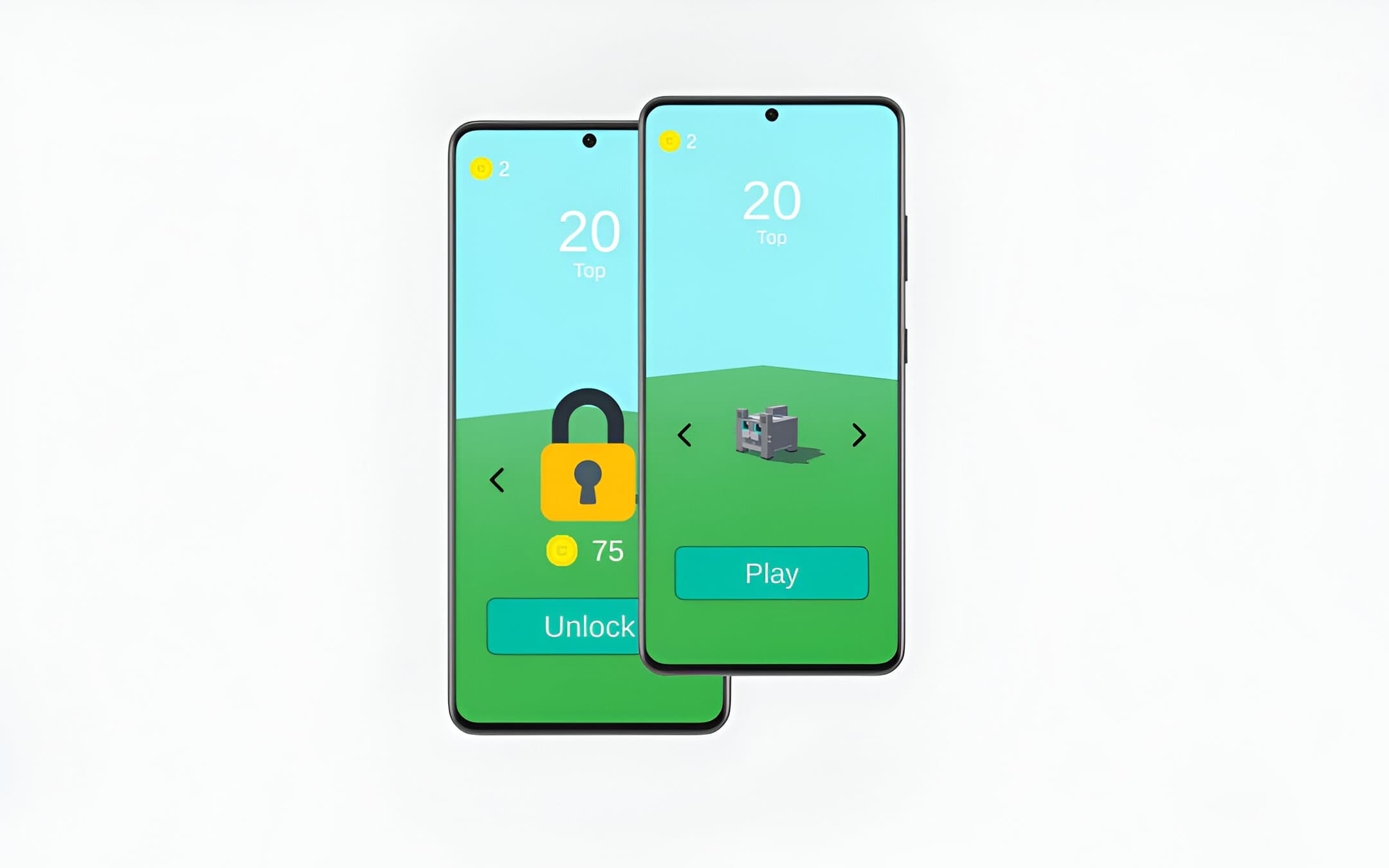
Hopa
2023Games
A mobile game where animals hop onto stacking platforms, collecting coins to unlock new characters.